If you’ve ever spent time researching industrial water treatment systems, chances are you’ve encountered RO EDI technology – the gold standard for producing high-purity water used in pharmaceuticals, semiconductor manufacturing, power generation, and even some laboratory applications. As someone who’s been in the business of designing, installing, and servicing these systems for over a decade, I’ve found that even experienced plant operators sometimes ask the same question: what exactly does a reverse osmosis booster pump do in an RO EDI setup? It’s easy to overlook a component that’s not the core membrane or the electrodeionization unit, but trust me – this small, workhorse pump is often the reason your system runs smoothly, or why it falls short of producing consistent quality water. Let me break this down in plain terms, no overly complicated jargon, just real-world experience from someone who’s dealt with the ins and outs of these systems every day. RO EDI Water Treatment System
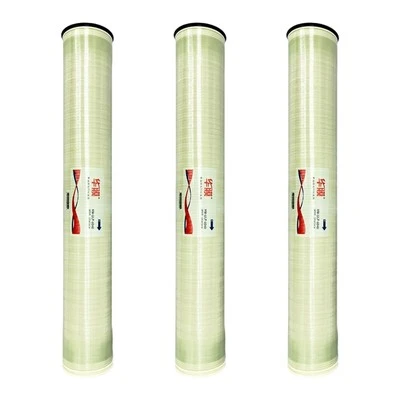
First, let’s quickly recap how an RO EDI system works, so the booster pump’s role makes sense. A standard RO EDI system starts with raw water (usually municipal tap, well water, or surface water) that goes through pre-treatment: sediment filters to remove dirt and particles, activated carbon filters to get rid of chlorine and organic compounds, and sometimes a water softener if the raw water has high hardness. From there, the water moves to the reverse osmosis unit, which uses semipermeable membranes to push water through, leaving behind 95-99% of dissolved solids like salts, heavy metals, and minerals. Then it goes to the EDI module, which uses electricity to polish the water even further, removing the remaining ions to get to resistivity levels of 18.2 megohm-cm – that’s the ultra-pure water needed for things like rinsing semiconductor wafers or mixing injectable drugs.
Now, the problem is that the pressure needed to push water through RO membranes is higher than the pressure that pre-treatment pumps can provide. Pre-treatment pumps are designed to move water through filters, not to overcome the resistance of RO membranes, which can create a lot of backpressure as they get fouled over time. That’s where the reverse osmosis booster pump comes in. Its primary function is to increase the feed water pressure to the exact level required for efficient RO membrane operation. But it’s not just about cranking up the pressure – it’s about maintaining consistent pressure, even when raw water conditions fluctuate. For example, if your well water pressure drops because neighboring households are using water, or if municipal water pressure varies throughout the day, the booster pump adjusts to keep the RO feed pressure steady. Inconsistent pressure leads to inconsistent water production, and inconsistent production means you might not have enough high-purity water when you need it – a big problem for manufacturing plants that run 24/7.
Wait, let’s get specific about pressure numbers, because that’s where the science matters. Most brackish water RO systems need feed pressure between 150 and 250 psi, while seawater RO systems can need up to 800 psi. Pre-treatment pumps typically only push water at 50 to 80 psi – so you’re almost doubling that pressure right there. If the pressure is too low, two bad things happen: first, the RO membranes don’t push enough water through, so your system’s production rate drops. That means you’re not getting as much purified water as you’re paying to treat, which hurts your operational costs. Second, low pressure reduces the rejection rate of dissolved solids. If your membranes aren’t working at their designed pressure, they’ll let more salts and minerals pass through, which means you’re sending subpar water to the EDI unit. EDI is great at polishing, but it can only handle so much load – if the RO feed water has higher-than-allowed conductivity, the EDI module might get overworked, wear out faster, and produce water that doesn’t meet your specs.
But the booster pump does more than just boost pressure. It also helps with membrane fouling control. Here’s a trick I’ve learned over the years: when the booster pump maintains optimal pressure, it creates enough cross-flow velocity over the RO membranes. Cross-flow is when water flows parallel to the membrane surface, instead of straight through it. This flow sweeps away particles, minerals, and other contaminants that would otherwise build up on the membrane surface – that’s fouling. If the pressure is too low, cross-flow slows down, and fouling happens faster. That means you have to clean your membranes more often, which adds downtime and costs for cleaning chemicals. Over time, fouled membranes also need to be replaced sooner, so investing in a reliable booster pump actually saves you money in the long run by extending membrane life.
Another point that’s often overlooked: the EDI unit’s performance is directly tied to the quality of the RO water feed. I’ve seen plants skip upgrading their booster pumps when they expand their production, and the result is that their EDI units start failing prematurely. For example, if you double your RO production capacity, the pre-treatment pumps might not be able to keep up, but a correctly sized booster pump ensures that every gallon of water going to the EDI is at the right pressure and has the right purity. The EDI module uses an electric current to separate ions, and if the RO water has more residual ions because of low pressure, the EDI has to work harder to remove them. This increased workload leads to higher energy use, shorter electrode life, and more frequent maintenance. So the booster pump isn’t just an RO component – it’s a critical link between the RO and EDI stages that keeps the entire system in balance.
Let me share a real example from a client I worked with last year. A small pharmaceutical plant in Ohio had an RO EDI system that was producing water just below their required resistivity (they needed 18.0 megohm-cm, but were hitting 17.2). They’d cleaned their RO membranes twice in six months, replaced the EDI electrodes once, and were still having issues with batch failures during production. When we did a system audit, we found that their booster pump was failing, and it was only providing 110 psi instead of the required 180 psi. That low pressure was causing the RO membranes to only reject 92% of dissolved solids, instead of the designed 98%. We replaced the booster pump with a variable-speed model (more on that in a minute), and within a week, their resistivity was at 18.3 megohm-cm. They didn’t need to clean the RO membranes again, and the EDI unit’s energy use dropped by 15%. That’s the impact a good booster pump can have – it’s not a fancy part, but it solves real, costly problems.
Now, not all booster pumps are created equal. I always recommend variable-speed booster pumps (VSP) for RO EDI systems, instead of fixed-speed pumps. Fixed-speed pumps just turn on and off, which can cause pressure spikes when they activate, and they waste energy by running at full capacity even when you don’t need it. Variable-speed pumps adjust their motor speed based on the actual pressure needed, so they only use as much energy as required. That’s a big plus for operational costs – over a year, the energy savings from a VSP can pay for the pump itself. For example, a system that runs 24/7 might save $2,000 to $3,000 a year on electricity with a variable-speed booster pump, compared to a fixed-speed model. Also, variable-speed pumps reduce pressure spikes, which are hard on RO membranes. Those sudden pressure changes can cause membranes to crack or degrade faster, so a smooth, consistent pressure from a VSP helps extend membrane life even more.
Another factor to consider is the size of the booster pump. I see a lot of plants get undersized or oversized pumps, and both are bad. An undersized pump can’t provide enough pressure, as in the Ohio example, leading to poor RO performance. An oversized pump wastes energy and can create too much pressure, which also damages membranes. The right size depends on your system’s capacity, raw water quality, and type of RO membranes. When we design a system for a client, we test their raw water for hardness, TDS (total dissolved solids), and temperature, then calculate exactly how much pressure is needed at every stage of membrane life (from new, when fouling is minimal, to when membranes are due for cleaning, when backpressure is higher). That way, the booster pump is perfectly matched to their system, no guesswork.
Let’s also talk about common mistakes that lead to booster pump issues. One mistake we see is not maintaining the pump properly. Booster pumps need regular checks of the motor, seals, and pressure gauges. If the seal fails, water can leak into the motor, which can burn it out. If the pressure gauge is inaccurate, you might not notice that the pump is dropping pressure until it’s too late. Another mistake is ignoring pre-treatment issues. If your sediment filters are clogged, that increases backpressure, so the booster pump has to work harder. It’s a chain: pre-treatment problems put extra strain on the booster pump, which in turn affects RO and EDI performance. So regular maintenance of all components – not just the booster pump – is key.
So, to circle back to the original question: what is the function of the reverse osmosis booster pump in an RO EDI Water Treatment System? It’s the component that delivers the consistent, optimized pressure needed for RO membranes to perform at their best, ensuring high solute rejection and sufficient water production. It maintains cross-flow velocity to reduce membrane fouling, extending membrane life and reducing maintenance costs. It acts as a buffer between fluctuating raw water pressure and the stable pressure required by downstream RO and EDI units, preventing operational disruptions and consistent water quality. And when you choose the right type (variable-speed) and size, it also helps lower energy costs and reduces wear on the entire system.
If you’re noticing that your RO EDI system is producing less water than it used to, or if your final water quality is inconsistent, the reverse osmosis booster pump is definitely worth checking. As a supplier of RO EDI water treatment systems, we’ve seen firsthand how a well-matched, properly maintained booster pump can make the difference between a system that runs smoothly and one that’s a constant source of headaches. Every client we work with gets a detailed system assessment, including checking pump performance, and we help them select the right booster pump that fits their specific needs and budget. Whether you’re a small pharmaceutical plant, a semiconductor manufacturing facility, or a power station needing high-purity water, we can tailor a solution that includes all the critical components – including the right reverse osmosis booster pump – to keep your system running efficiently.
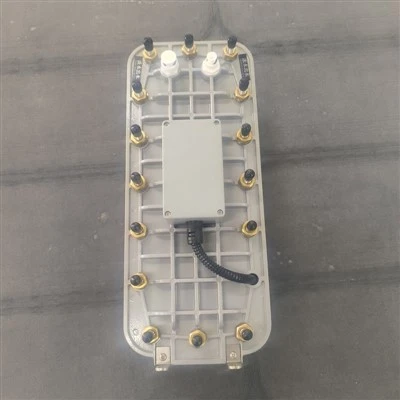
If you have questions about your current RO EDI system, need help selecting a booster pump, or are looking to upgrade or install a new system, we’re here to help. Feel free to reach out to our team to discuss your water treatment needs.
Urea Purification Membrane References
- Water Treatment Principles and Design, 2nd Edition, Crittenden, J.C., et al., John Wiley & Sons, 2012.
- Reverse Osmosis and Nanofiltration: A Guide for the Water Industry, American Water Works Association, 2005.
- Electrodeionization: Principles and Applications, Meltzer, T.H., Jornitz, M.W., Interpharm Press, 1999.
- Practical Guide to Reverse Osmosis Systems, Kodera, Y., et al., Elsevier, 2018.
- Water Treatment Operator’s Handbook, 5th Edition, Linsley, R.K., McGraw-Hill, 2005.
Fujian Huamo Technology Co., Ltd.
Fujian Huamo Technology Co., Ltd. is one of the most professional ro edi water treatment system manufacturers and suppliers in China, featured by quality products and good service. Please rest assured to wholesale the best ro edi water treatment system made in China here and get price list from our factory. Contact us for custom service and OEM service.
Address: No.6 Hengtong Rd, Shanmei Village, Xiamei Town, Nanan City, Fujian Province, China
E-mail: info@huaromembrane.com
WebSite: https://www.hmromembrane.com/
