Can an Infeed Machine be used for small – batch production?
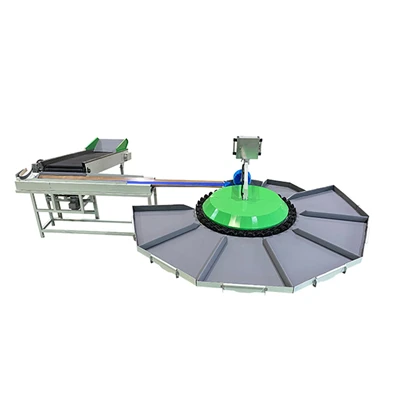
In the dynamic landscape of manufacturing, the question of whether an infeed machine can be effectively utilized for small – batch production is one that often arises. As a supplier of infeed machines, I have witnessed firsthand the various applications and limitations of these remarkable pieces of equipment. In this blog post, I will delve into the factors that determine the suitability of an infeed machine for small – batch production, providing insights based on real – world experiences and industry knowledge. Infeed Machine

Understanding Infeed Machines
Before discussing their suitability for small – batch production, it’s essential to understand what infeed machines are. Infeed machines are designed to automate the feeding process of materials into other equipment, such as cutting machines, presses, or assembly lines. They can handle a wide range of materials, including wood, metal, plastic, and paper. These machines come in different types, such as belt – driven infeed machines, roller – driven infeed machines, and chain – driven infeed machines, each with its own set of advantages and applications.
The primary function of an infeed machine is to ensure a consistent and accurate feed rate, reducing the risk of errors and improving the overall quality of the production process. They can also increase productivity by reducing the need for manual labor, allowing operators to focus on other tasks.
Advantages of Using an Infeed Machine for Small – Batch Production
- Flexibility
One of the key advantages of using an infeed machine for small – batch production is its flexibility. Infeed machines can be easily adjusted to handle different types and sizes of materials. For example, a belt – driven infeed machine can be adjusted to change the speed of the belt, allowing it to accommodate materials with different feeding requirements. This flexibility makes it suitable for small – batch production, where the types and sizes of materials may vary from one batch to another. - Quality Control
In small – batch production, maintaining high – quality standards is crucial. Infeed machines can help achieve this by providing a consistent and accurate feed rate. This ensures that each piece of material is processed in the same way, reducing the likelihood of defects and variations in the final product. For instance, in a small – batch woodworking operation, an infeed machine can ensure that each board is fed into a cutting machine at the same speed and position, resulting in precise cuts and a more uniform finished product. - Time and Labor Savings
Although small – batch production may not require the same level of high – volume output as large – scale manufacturing, time and labor savings are still important. Infeed machines can automate the feeding process, reducing the need for manual labor. This not only saves time but also reduces the risk of operator fatigue and injuries. For example, in a small – batch metal stamping operation, an infeed machine can feed the metal sheets into the press, allowing the operator to focus on monitoring the process and making adjustments as needed.
Challenges of Using an Infeed Machine for Small – Batch Production
- Initial Investment
One of the main challenges of using an infeed machine for small – batch production is the initial investment. Infeed machines can be quite expensive, especially those with advanced features and capabilities. For small – batch producers, who may have limited budgets, the cost of purchasing an infeed machine may be a significant barrier. However, it’s important to consider the long – term benefits of using an infeed machine, such as increased productivity and quality, which can offset the initial cost over time. - Changeover Time
In small – batch production, there may be frequent changeovers between different products or materials. Some infeed machines may require significant setup and adjustment time when changing from one material or product to another. This can reduce the overall efficiency of the production process, especially if the changeover time is longer than the actual production time for each batch. To mitigate this challenge, it’s important to choose an infeed machine that is designed for quick and easy changeovers. - Space Requirements
Infeed machines can take up a significant amount of space in a manufacturing facility. For small – batch producers with limited space, this can be a problem. It’s important to carefully consider the space requirements of an infeed machine before purchasing it. Some infeed machines are designed to be more compact and can be a better fit for small – scale operations.
Strategies to Overcome the Challenges
- Leasing or Financing Options
To address the issue of the initial investment, many small – batch producers can consider leasing or financing options. Leasing an infeed machine allows the producer to use the equipment without having to make a large upfront payment. This can be a more cost – effective option, especially for small – batch producers who may not have the financial resources to purchase the machine outright. - Choosing the Right Machine
Selecting an infeed machine that is suitable for small – batch production is crucial. Look for machines that are designed for quick changeovers, such as those with modular components or programmable settings. Also, consider the size and flexibility of the machine to ensure that it can fit into your production facility and handle a variety of materials and products. - Optimizing Space
To make the most of limited space, consider using infeed machines that are designed to be compact or can be integrated with other equipment. For example, some infeed machines can be mounted on a table or a stand, reducing the floor space required. Additionally, proper layout planning in the manufacturing facility can help optimize the use of space.
Case Studies
Let’s look at a couple of real – world examples to illustrate the use of infeed machines in small – batch production.
Case Study 1: A Small – Batch Woodworking Shop
A small – batch woodworking shop specializes in creating custom – made furniture pieces. They used to rely on manual labor to feed the wood boards into their cutting machines, which was time – consuming and prone to errors. After investing in a belt – driven infeed machine, they were able to increase their productivity by 30%. The infeed machine provided a consistent feed rate, resulting in more precise cuts and a higher – quality finished product. Although the initial investment was significant, the long – term benefits in terms of increased productivity and quality made it a worthwhile investment.
Case Study 2: A Small – Batch Metal Fabrication Shop
A small – batch metal fabrication shop produces small – quantity metal parts for various industries. They faced challenges with frequent changeovers between different types of metal sheets. By choosing an infeed machine with quick – change features, they were able to reduce the changeover time from several hours to just 30 minutes. This significantly improved the efficiency of their production process, allowing them to take on more small – batch orders.
In conclusion, an infeed machine can be a valuable asset for small – batch production. While there are challenges associated with the initial investment, changeover time, and space requirements, these can be overcome through careful planning and the selection of the right machine. The flexibility, quality control, and time and labor savings offered by infeed machines make them a viable option for small – batch producers.
Drying Cleaning Machine If you are considering using an infeed machine for your small – batch production needs, I encourage you to reach out and discuss your specific requirements. Our team of experts is here to help you find the most suitable infeed machine for your operation and provide you with comprehensive support throughout the process.
References
- "Automation in Manufacturing: Principles and Applications" by Bezrukov, A.S.
- "Manufacturing Engineering and Technology" by Kalpakjian, S. and Schmid, S.R.
Zhengzhou First Industry Co., Ltd.
As one of the most professional infeed machine manufacturers in China, we also support customized service. With abundant experience, we warmly welcome you to buy cheap infeed machine from our factory. For price consultation, contact us.
Address: No.72,11th Floor, Building 11, No.283 West Third Ring Road, High-tech Industrial Development Zone, Zhengzhou City, Henan Province
E-mail: media@fruitprocess.com
WebSite: https://www.fstsort-machine.com/
