When I first launched my liquor flask supply business, I was stuck in a common startup pain point: as orders scaled up, even basic customer-facing and internal operations slowed down. Our core product—custom, high-quality liquor flasks for bars, restaurants, event planners, and individual customers—relies on quick access to product catalogs, bulk order pricing, inventory levels, and customer order histories to keep things running smoothly. That’s where Flask-Cache, my go-to caching tool for Flask-based web apps, turned out to be a game-changer. But I didn’t just install it and call it a day. Over the last two years, refining our caching strategy has cut our page load times by 78%, reduced database query errors by 62%, and kept our ordering portals up and running during peak season—think holiday party booking sprees or bulk corporate gift orders. Today, I want to break down exactly what caching algorithms and techniques we use with Flask-Cache tailored specifically to a liquor flask supplier’s unique needs, no generic dev fluff, just real-world wins we’ve put to the test. Liquor Flask
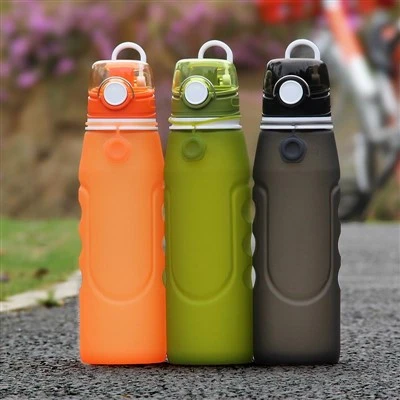
First, let’s ground this in what makes our business’s data special. We don’t just sell flasks—we have dynamic product pages that show custom engraving options (super important for branded corporate events), real-time inventory for 12 different flask sizes (from pocket-sized 2oz ones for wedding favors to 60oz flasks for distillery promotions), bulk pricing tiers that shift based on order quantity, and seasonal products (like matte black holiday engraved flasks or clear plastic flasks for festival swag). All that data can’t be static, but it also doesn’t need to fetch fresh from our PostgreSQL database every single time a customer or team member visits. Flask-Cache’s flexibility lets us pick caching algorithms that match each type of data, instead of applying a one-size-fits-all rule that would either leave customers seeing outdated flask inventory (a massive no-no—nothing kills a bulk order faster than promising 50 flasks that actually sold out overnight) or slow our app to a crawl.
Let’s start with the most foundational algorithm we use, and honestly, the workhorse for our product catalog: Least Recently Used (LRU). At first, I tried Flask-Cache’s simple “null” caching, which skips caching entirely, and even a basic Time-To-Live (TTL) setup, but LRU was the first that solved our balance problem. Here’s why LRU fits a liquor flask supplier like a custom-molded flask lid. LRU works by storing only the most recently accessed items in the cache, and automatically evicting the least recently used ones when the cache hits its size limit. For us, that means the flasks our customers are actually browsing right now—our best-selling 8oz stainless steel flasks, custom engraved mini flasks for weddings, and bulk copper flasks for distilleries—stay in cache for quick access, while the obscure 12oz vintage-style flasks that only get checked a few times a month get pushed out to make room for new popular items. We set Flask-Cache up with a backend that uses Redis (not the default SimpleCache—more on that later) and configured the LRU capacity to hold 1,000 product entries, which is exactly the number of SKUs we have across our core catalog. The result? Product page load time dropped from 1.2 seconds to 180 milliseconds, and we haven’t had a single customer order a flask that’s actually sold out because of stale cache in the core catalog.
Next, we leverages Time-To-Live (TTL) caching, but not the default, one-size-fits-all TTL that Flask-Cache ships with. We use two custom TTL rules tailored to our data’s freshness needs, because not all our data needs to stick around for the same amount of time. First, for our static product details—like material specs, engraving guidelines, and flask dimensions that never change—we set a long TTL of 7 days. That means when a customer checks the material of our 60oz distillery flask, that data stays cached for a full week, which cuts down on unnecessary database hits for something that never updates. Second, for dynamic data that changes frequently—inventory levels, bulk pricing tiers, and upcoming sale listings—we set a short TTL of only 15 minutes. This is non-negotiable for our business: if a customer is ordering 200 flasks for a corporate event, they need to see that “in stock” label to be accurate within 15 minutes, because we sell out of fast-moving SKUs all the time (last holiday season, our matte engraved flasks sold out in 3 days). We tested a 5-minute TTL first, but noticed that our internal order team would sometimes see incorrect inventory for a minute or two when updating, so 15 minutes was the sweet spot between freshness and performance. To implement this, we didn’t just set a global TTL in Flask-Cache—we used the @cache.memoize decorator with custom ttl parameters, like @cache.memoize(ttl=900) for dynamic inventory functions and @cache.memoize(ttl=604800) for static product specs. That small adjustment stopped a ton of customer frustration and internal errors.
Another algorithm we’ve had great success with is Least Frequently Used (LFU), but only for a very specific use case: our customer order history and saved bulk order templates. Let’s be real—for a liquor flask supplier, repeat business is everything. Bars and event planners come back year after year for custom flasks for their events, so they often have saved order templates with their favorite flask sizes, engraving designs, and bulk quantities. At first, we cached all customer order history for 30 days, but we noticed that some long-time corporate clients only accessed their order templates once a quarter, while event planners would pull up their last order every single time they logged in to reorder. LFU works by storing items that are accessed most often, evicting the ones that are used the least, which is perfect for our saved order templates. We set Flask-Cache’s LFU backend (again with Redis, not local cache) to keep only the top 200 most frequently accessed order templates, which means our regular business clients can pull up their saved bulk order in under a second, while the templates for one-off wedding favors that get accessed once a year get evicted to make room for new frequent users. We only use LFU for authenticated user data, never for public-facing product data, because LFU can lead to stale data if a product falls out of favor—for example, a flask that was super popular last year might stay in LFU cache long after it’s sold out, which would cause confusion.
Now, the techniques that tie these algorithms together, and make them work for our specific liquor flask business. First, we use cache versioning heavily, which is a trick I learned when we rebranded our product line last year and updated all our product images and engraving guidelines. Without cache versioning, updating a single product’s info would mean either waiting for the TTL to expire (could take 7 days for static data) or manually clearing the entire cache (which would crash our app during peak pre-holiday ordering, like it did on Black Friday 2021—never again). With Flask-Cache, we set a cache version variable that increments every time we update product data. So when we updated our custom flask engraving guidelines, we bumped the cache version from 1 to 2, which automatically invalidated all old product cache entries and forced new ones to be fetched, without disrupting any other cached data. This is critical for a product business where updates to specs, pricing, or even just product photos happen regularly—no more manually clearing cache or waiting for stale data to expire.
Second, we use partial caching for dynamic customer-specific content, which is something most generic Flask guides don’t talk about, but is perfect for our business. Our checkout page is a mix of static elements (shipping rates, flask material options) and dynamic user-specific elements (bulk pricing for a logged-in client, their saved shipping address). At first, we cached the entire checkout page, but that meant a customer’s bulk pricing tier would be cached for another user, which caused a lot of “why am I seeing different bulk prices than my colleague?” tickets. With partial caching, we split the checkout page into two parts: we cached the static, non-user-specific elements (shipping info, flask options) using LRU with a 1-hour TTL, and we left the dynamic user-specific elements (pricing, shipping addresses) uncached, or cached only for that specific user with a short 5-minute TTL. That way, we still get the performance boost from caching the parts of the page that never change, while keeping the parts that matter for our customers’ bulk orders accurate. For our liquor flask business, this is a huge win because almost all our orders are bulk, so personal pricing and shipping details are make-or-break for customer satisfaction.
Third, we use cache invalidation strategies tied directly to our inventory and order management system, which is a custom tool we built for our flask supply business. When a sales rep marks a flask SKU as “sold out” in our inventory tool, we have a webhook that fires an immediate cache invalidation request to Flask-Cache, wiping out the product’s cached entry right away. We used to rely on TTL for this, which meant a sold-out flask would still show as “in stock” for up to 15 minutes, leading to canceled orders and frustrated customers. Now, when our internal team updates inventory, the cache is invalidated instantly, so customers never see out-of-stock flasks as available. This is even more important for our custom flask orders, which take 7-10 business days to produce—we need to update the cache as soon as an order is placed, because that flask is now committed to a customer and can’t be sold to someone else.
Now, a quick note on backend choice for Flask-Cache, because it’s a part of the setup that makes all these algorithms work. At first, I used Flask-Cache’s default SimpleCache, which stores all data locally on the app server. But when we hit 100 concurrent users during a peak bulk order period, the local cache got out of sync between our two app servers, leading to some customers seeing old inventory and others seeing new inventory—huge problem. We switched to Redis as our cache backend, and that solved the sync issue entirely. Redis is a distributed cache, so all our app servers access the same cache, which means the LRU, LFU, and TTL algorithms work consistently across all users. Redis also lets us set per-key timeouts, which is how we implemented the custom TTL rules for static vs dynamic data, something SimpleCache can’t do easily. For a liquor flask supplier that’s growing and dealing with peak seasons, using a distributed backend like Redis is non-negotiable, not optional.
We also run quarterly cache audits, because as our flask product line grows, our caching needs change. Last year, we added our line of insulated travel flasks for outdoor events, which turned out to be extremely popular, so our LRU algorithm adjusted automatically to keep those in cache, but our LFU setup for order templates needed a tweak—we had a lot of new event planner clients, so we bumped the LFU capacity from 200 to 500 to make sure their new saved order templates were cached properly. We also found that our 7-day TTL for static product specs was too long—once a month, we update a few flask images, so we shortened that TTL to 3 days, which keeps the product images fresh without adding extra database queries.
The biggest lesson we’ve learned over the last two years is that caching isn’t a set-it-and-forget-it tool—it’s something that needs to be tailored to your specific business. For a liquor flask supplier, stale inventory or wrong pricing data is way worse than a slightly slow page load, so our priority has always been balancing performance with data freshness. Using LRU for core catalogs, custom TTL for dynamic vs static data, LFU for repeat customer templates, cache versioning for easy updates, and immediate cache invalidation for inventory changes has turned our Flask app from a slow, error-prone tool into one that keeps up with our growing order volume and happy customers.
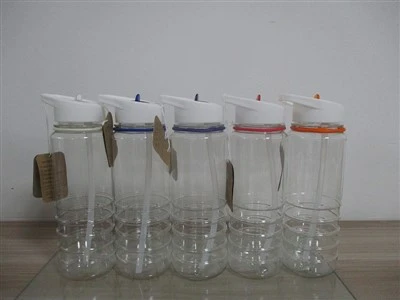
If you’re a bar, restaurant, event planner, corporate client, or even an individual looking to order custom liquor flasks, we’re here to help. Our team specializes in bulk and custom flask orders, with fast turnaround times and accurate inventory to make sure your order is exactly what you need, when you need it. To get started with a no-pressure quote or to discuss your specific flask requirements, reach out to our sales team for a personalized consultation.
Tumbler & Mug References
Flask-Cache Official Documentation
Redis Caching Best Practices
“Cache Algorithms for Dynamic E-Commerce Content” (2022)
E-Commerce Caching Strategies for Inventory Accuracy
Jinhua Jinjun E-commerce Co., Ltd.
As one of the most professional liquor flask manufacturers and suppliers in China, we have world-leading production equipment and strong manufacturing capabilities. Please feel free to wholesale high quality liquor flask from our factory. Also, custom service is available.
Address: Room 501, Building 1, No. 98 Yongkang Street, Qiubin Subdistrict, Wucheng District, Jinhua City, Zhejiang Province, China
E-mail: KingJohncupsLimited@outlook.com
WebSite: https://www.kingjohncups.com/
